
HAT-SYS | HOT RUNNER FOR ZAMAK
Hot runner for Zamak: direct gating and high-efficiency die casting
Reducing solidified sprues and runners, bringing molten metal closer to the cavity, and engineering the feed system and mold as one integrated technical solution.
Why Zamak
The most mature metal environment for applying hot runner technology to die casting
In conventional zinc die casting, the sprue and runners solidify together with the part and must then be separated and remelted. In a hot runner system, the metal is kept molten — or thermally controlled — along the feed path up to the gate, reducing the amount of metal that becomes a solidified runner system.
Zamak is particularly interesting because it operates at substantially lower temperatures than aluminum and because the zinc die-casting sector already includes documented industrial applications, case studies, and specialized hot runner solutions. This does not mean that every part is automatically suitable: geometry, machine, alloy, cavity count, gate design, and quality requirements remain decisive.
How it works
From the molten-metal bath to the cavity through a thermally controlled feed system
Metal supply
Molten metal is delivered from the injection unit toward the heated feed circuit.
Heated manifold
The manifold compensates for heat losses and keeps the alloy above its solidification range.
Nozzle and gate
One or more nozzles bring the alloy directly or almost directly to the injection point.
Controlled shut-off
The gate area must prevent leakage when the mold opens, using a dedicated thermal or mechanical strategy.
Next cycle
The part is ejected while the metal upstream remains available inside the hot runner circuit.
Potential benefits
Where the economic advantage can come from
Less return metal
Sprues and runners do not necessarily have to solidify completely at every cycle. The benefit becomes greater when the part is small compared with the conventional runner system.
Less remelting energy
Reducing return metal means less alloy to cool, separate, handle, and return to the melting furnace.
Potentially shorter cycles
If the conventional runner is a significant thermal mass, reducing it can remove part of the load from one of the cycle-limiting phases.
More productive cavities
Reducing the space occupied by the runner system can make it possible to use more of the mold area for productive cavities.
Less entrained air
A shorter feed path and direct gating can help reduce the air introduced by the runner system and, in suitable applications, contribute to lower porosity.
Fewer downstream operations
Reducing the runner system can reduce separation, trimming, runner handling, and some post-casting operations.
Greater gate freedom
Direct or multiple nozzles make it possible to study injection points that are difficult to reach with conventional runners.
More useful product per shot
With the same machine capacity, a greater share of the injected volume can become finished product rather than solidified feed system.
A significant public case study
From 16 to 32 cavities in a Zamak 5 application documented by the International Zinc Association
IZA CASE STUDY — “WINDOW PART”
16 → 32
cavities in the same application, using four hot runner nozzles, each feeding eight cavities.
In the case study, the share of zinc associated with the gate system is reported as approximately 60–70% in the conventional process versus approximately 25% with the hot runner solution.
HAT-SYS application example
Small high-volume components: a natural candidate for evaluation
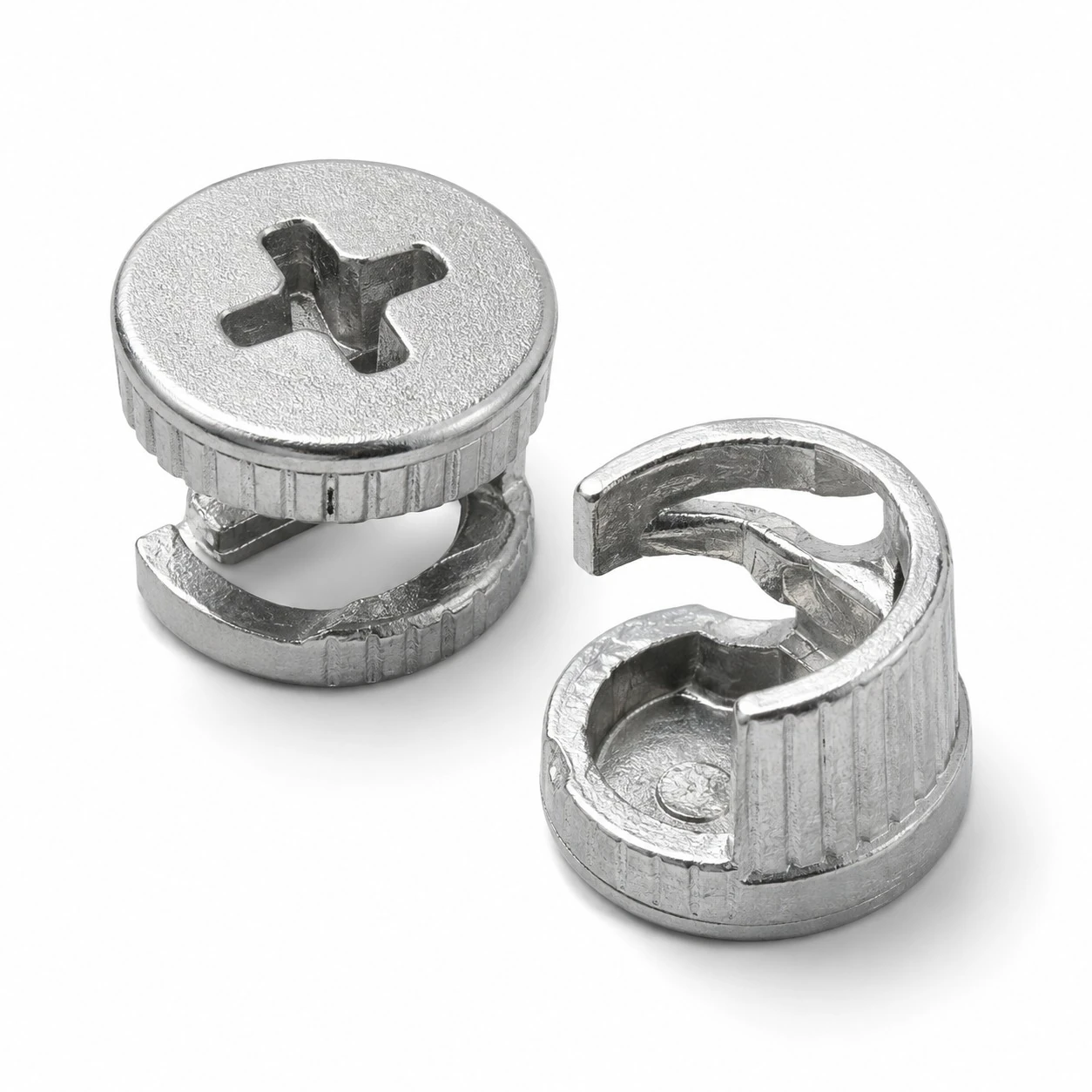
The furniture cam connector shown here is an example of a Zamak component on which HAT-SYS has already worked. Its compact geometry and production type make it a useful example of the kind of application in which direct or near-direct feeding may be worth evaluating.
While we wait for HAT-SYS to provide images, process data, and technical details approved for publication, this page deliberately avoids assigning any performance figures to this specific project.
- Small or medium-size component
- Serial production and high volumes
- Runner weight significant compared with part weight
- Interest in multi-cavity layouts or direct gating
When it makes the most sense
Three questions to ask before discussing retrofit or a new mold
How much does the runner weigh compared with the part?
The higher the share of metal that currently becomes sprue and runner, the greater the potential economic benefit of reducing the feed system.
Is the cycle limited by the mass that must solidify?
If the runner represents a significant thermal mass, the potential benefit may involve not only metal savings but also the time required to complete each cycle.
Is more output required from the same machine?
A more compact runner layout can make better use of the available mold area or shot volume.
The real engineering challenges
With molten metal, gate design and sealing become central to the project
The principle is straightforward; making it reliable is not. Molten Zamak operates in a thermal, mechanical, and electrical environment that is much more demanding than polymers.
Temperature and solidification
The circuit must keep the alloy stable while the gate must close safely when the mold opens.
Corrosion and erosion
Materials, inserts, and coatings must be selected according to the alloy and flow conditions.
Manifold sealing
A high-pressure molten-metal leak is a reliability and safety issue, so preload and mating surfaces are integral parts of the design.
Maintenance
Tips, heaters, sensors, and inserts should be designed for accessibility and replacement within production-compatible downtime.
GDS + HAT-SYS
A dedicated metal project, not a plastic system simply adapted
The value of the project lies in integrating expertise in manifolds, nozzles, thermal control, and mold construction with the specific requirements of die casting. GDS collects the customer’s application data and coordinates the technical exchange in Italy; HAT-SYS develops the system engineering and, when required, can integrate this work into the development of the complete mold.
Feasibility study
What is needed to determine whether a Zamak component is a good candidate
Send us the part and the current process data
A serious first evaluation requires information about both the component and the production equipment. This makes it possible to compare the existing solution with a potential hot runner concept and identify the points that need further study.
- STEP / Parasolid file and 2D drawing
- Zamak alloy and pouring temperature
- Die-casting machine make and model
- Current and target number of cavities
- Mold layout, gates, and existing runner system
- Part weight and feed-system weight
- Cycle time, annual volumes, and current scrap
- Surface, porosity, and post-processing requirements
Related pages
Hot runner systems for metal
Overview of Zamak, aluminum, potential benefits, engineering challenges, and the role of GDS + HAT-SYS.
Back to the main page →
Retrofit and aluminum
Conversion of existing molds and development of special projects in a more demanding thermal and mechanical environment.
Open the technical page →
FAQ
Frequently asked questions about hot runner systems for Zamak
Is hot runner technology for Zamak only experimental?
No. Zinc die casting includes documented industrial applications, association case studies, specialized suppliers, and dedicated patents. This does not mean that every part is automatically suitable.
Is the runner always eliminated completely?
No. Some layouts can achieve direct gating and almost sprueless production, while others may use much shorter runners. The actual result depends on part geometry and system design.
Is metal saving the only benefit?
No. The potential benefits can also involve remelting, cycle time, cavity count, machine-capacity utilization, entrained air, and downstream operations. Their relative importance varies from one application to another.
Can the technology be used on an existing hot-chamber machine?
The technology has been applied in the industry on conventional die-casting machines, but actual compatibility must be verified according to machine, interface, mold, gate, and operating conditions.
Can an existing mold be converted?
In some cases, yes. Retrofit feasibility is evaluated by analyzing mold plates, available space, cavities, cooling system, gating, and machine interface.
Can GDS and HAT-SYS also develop a new complete mold?
Yes. The project can include both the hot runner system and its integration into a newly developed mold, according to the technical and commercial scope agreed for the application.
Technical references
Public sources for further reading
The figures reported above are presented as industry references and specific case histories, not as guaranteed performance for every project.
International Zinc Association — Casting Study: Window PartZamak 5 case study showing a conversion from 16 to 32 cavities.
Föhl — Hot Runner Technology in Zinc Die CastingIndustrial experience and published zinc die-casting applications.
Pedeo — Hotrunner technology in zinc HPDCDirect gating and published application benefits in Zamak die casting.
Do you have a Zamak component to evaluate?
Send GDS the part drawing, alloy, die-casting machine data, and current mold layout. We will coordinate an initial technical evaluation with HAT-SYS covering the hot runner potential, retrofit options, or a new mold project.