
PLASTIC INJECTION MOULDING
Plastic injection moulding is a key industrial process used to manufacture a wide range of plastic components for sectors including automotive, medical and consumer goods. This method makes it possible to produce complex parts with a high degree of precision and repeatability.
Material Selection and Preparation
Selecting the right plastic material is crucial and depends on the properties required for the finished product, such as strength, flexibility and resistance to heat or chemicals. Common materials include polyethylene, polypropylene, ABS (acrylonitrile butadiene styrene) and polycarbonate. These materials are supplied as pellets, which must be dried to remove moisture and prevent defects during melting.

MOULD DESIGN
The mould is the element that gives the product its final shape. It consists of two halves: the cavity and the core, which together form the moulding cavity. Mould design requires great precision to ensure an even flow of molten material and prevent defects. Key design elements include:
Ejection System: The mechanism that removes the part from the mould once it has solidified.
Sprue, Runner System and Gates: The channels through which the molten material enters the mould.
Parting Lines: The points where the two halves of the mould meet.
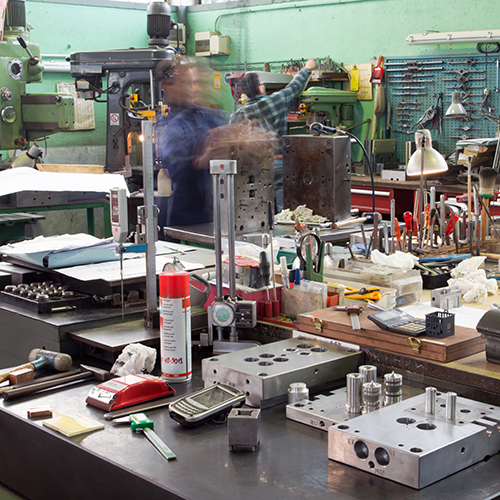
THE MOULDING PROCESS
Mould Closing: The two halves of the mould are closed and clamped together to withstand the injection pressure.
Injection: The molten plastic is injected into the mould cavity through the runner system.
Holding Pressure: Once the cavity has been filled, pressure is maintained to compensate for material shrinkage during cooling.
Cooling: The material solidifies and takes the shape of the mould cavity.
Mould Opening and Ejection: The mould opens and the solidified part is ejected.
GDS ABRASIVI
A thorough understanding of the injection moulding process is essential for optimising production and ensuring the quality of finished products. Accurate mould design, appropriate material selection and precise control of process parameters are all fundamental to success in this field.
The next step is to turn the design into reality: The mould’s forming surfaces must be finished to the standard specified by the design. GDS has always worked alongside mouldmakers in this crucial phase, supplying electric and pneumatic machines, tools and, above all, forty years of hands-on experience rooted in Enzo Montaguti’s professional expertise. Working with GDS is like having an experienced colleague by your side.

What We Offer
Discover what makes GDS the right choice for your finishing requirements.

Expertise
GDS solutions ensure high-precision, high-quality results.
Perfect Finishes
GDS products deliver perfect finishes and outstanding precision.
Innovation and Development
GDS promotes innovation in the industry while enhancing the value of Italian technologies.
GDS Abrasivi srl – Viale Sarca 336 – 20126 Milano
02 24 27 801 – commerciale@gdsabrasivi.com